Sunday, December 12, 2010

Can reading a book transform you or your business from good to great?

I initially became skeptical of business and management guru advice books, when I read Tom Aranow’s article "Paradigm of Management Fads" in Corporate Reports Wisconsin.

In the article, Aranow points out really good managers have always pursued lean operations and were doing so long before “Lean Manufacturing” became a popular consulting product. He writes:

It’s not that the great management fads haven’t been productive. Each can provide ways of working with and through issues that improve productivity and quality but none is a panacea or formula that will make any company shine.

What executives may be overlooking is that all of these fads are really examples of marketing phenomena in which intelligent authors have captured the essence of what good managers do every day and they’ve packaged them up for distribution and general consumption by departments, like the “TQM” departments that have adopted their brand names.

His concern is that each one of these may be a substitute for the incisive management thinking that leads to the development of high quality solutions custom designed for their best applications.
Aranow's article brought to mind the must-read business and advice books I’ve attempted reading in the past, but didn't finish:

Dale Carnegie's How To Win Friends and Influence People. I’ve tried reading this one twice.

David Allen's Getting Things Done: The Art of Stress-Free Productivity. I attempted to read this for Trent at The Simple Dollar's book club read-a-long.

Stephen Covey’s The 7 Habits of Highly Effective People. I wanted to learn what all the fuss was about.

I’ve since come to the conclusion, business advice books are similar to dieting; if I am not 100% committed to changing my behavior I will lose interest along the way.

Then there is Rework by Jason Fried and David Heinemeier Hansson which was touted as the must-read business book of the year this past summer. My initial thought upon finishing the book was:

Did I read the right book?
The book was written for a startup or starters (as the authors call them). Fried and Hansson provide advice they gleaned from running 37signals their successful startup company. I thought their ideas were nothing new and sounded good in theory, but wondered whether they'd work when implemented in the real world.

Which brings me to my latest read, David H. Freedman's book Wrong: Why experts* keep failing us--and how to know when not to trust them *Scientists, finance wizards, doctors, relationship gurus, celebrity CEOs, ... consultants, health officials and more. This book is based on the premise that most of the expert advice we receive – from scientists, doctors, economists, media experts, management gurus and others is wrong and misleading. The chapter “Experts and Organizations" helped me hone in on my skepticism of books written by business and manager gurus.

Freedman informs us major business movement books fit into one of two templates:

1. The authors place a number of winning companies or CEOs under a microscope, distilling what management principles these role models follow that losers don’t.

Examples include:
In Search of Excellence by Thomas Peters and Robert Waterman

Good to Great: Why Some Companies Make the Leap... and Others Don't by Jim Collins

First, Break All the Rules: What the World's Greatest Managers Do Differently by consultants and motivational speakers Marcus Buckingham and Curt Coffman

The Breakthrough Company: How Everyday Companies Become Extraordinary Performers by Harvard business professor Keith McFarland

Talent Is Overrated: What Really Separates World-Class Performers from Everybody Else by journalist Geoff Colvin

2. The second template relies on authors who have observed or derived a new strategy, trend or management technique that will determine which businesses will succeed in the coming years, showing how winning companies are already taking advantage of the new thinking.

Examples include:
Competing on Analytics: The New Science of Winning by the consultant and Babson College business professor Thomas Davenport and the Accenture researcher Jeanne G. Harris, who tell us the future winners will be those who do a better job wringing insight from data.

The World Is Flat 3.0: A Brief History of the Twenty-first Century by the journalist Thomas Friedman, who insists that winners will be those who most effectively globalize.

Wikinomics: How Mass Collaboration Changes Everything by the consultants Don Tapscott and Anthony D. Williams, who reveal that winning is tied to the wisdom of crowds.

The Future of Management by the London Business School professor and consultant Gary Hamel and the journalist Bill Breen who explain that winners will shed conventional management hierarchy.

Freedman concludes his findings by saying:
Unfortunately, as with weight loss and politics there is a vast sea of ideas pointing in all sorts of different directions for solutions to the same basic problems. They can’t all be right, and even if they could how can you tell which advice best applies to your company? Pg 128.
The bottom line is found in his interview with Jerker Denrell, a professor at Stanford’s business school who specializes in studying how business wisdom goes astray:
There is too much randomness in business success. Even if you identify the right companies and study them closely, you can’t figure out how to be like them. Pg 145.
I must say I was surprised to see one of my favorite business books of all time Good to Great: Why Some Companies Make the Leap... and Others Don't listed as one of Freedman’s main offenders. Jerker Denrell is quoted as saying:
It isn’t a good book because most companies don’t even do simple things well, like accounting. A better book would be Incompetent to Okay. But if you’re in academia, you won’t seem very interesting saying that sort of thing, and if you’re a consultant, you can’t make money off it.
So what is a small businessperson or manager wannabe who likes to have a thought provoking book on their bedside table to do?

Freedman mentions another subgenre that has sprung up within business publishing called business-literature summarizing books. You could read one of these. Examples include:

Guide to Management Ideas and Gurus (The Economist) by Tim Hindle

Entrepreneurial Excellence: Profit from the Best Ideas of the Experts by Richard J. Goossen

In conclusion, I wouldn’t discount all advice business books entirely, but it is important to remember a book is one person's opinion and their advice may not hold true for every company or every situation. In addition to business literature summarizing books, my favorite librarian suggests reading the top ten best-sellers of the previous year paying attention to the best idea from each book. Or better yet check out one of the books on 10 Overrated Business Books (and What to Read Instead) a list compiled by Geoffrey James.

It is fun to note, he includes In Search of Excellence by Thomas Peters and Robert Waterman as an overrated book. He suggests reading The Dilbert Principle by Scott Adams instead.

Why: You’ll know exactly why “excellent” companies go smack down the toilet.
Also included as overrated is Stephen Covey’s The 7 Habits of Highly Effective People. What to read instead: The Prince  by Niccolo Machiavelli
Why: It will provide you with the precise moral foundation you’ll need to be successful on the corporate ladder.
Who Moved My Cheese?: An Amazing Way to Deal with Change in Your Work and in Your Life by Spencer Johnson a book given to my husband by an outplacement company when he was laid off from his previous job also is overrated.

How to Lie with Statistics by Darrell Huff is the book to read instead.

Why: If you want to read a short book, this one will open your eyes. You’ll never look at a corporate presentation – or the evening news – exactly the same way again.
What do you think? Can a book transform you or your company from good to great? What business books have you found to be overrated? Or do you have a business book recommendation that belongs on everyone's nightstand?

Sunday, December 05, 2010

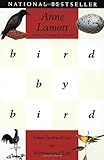
Anne Lamott's "Bird by Bird: Some Instructions on Writing and Life" and Jealousy

Motivation for reading:
I added Anne Lamott’s book Bird by Bird: Some Instructions on Writing and Life to my reading list when Kim from Sophisticated Dorkiness mentioned it in her post Happy Birthday, Anne Lamott. She had read it during a creative nonfiction class as a way to learn how to write narrative essays without getting bogged down. I decided I needed to read this book now when Kim included Anne Lamott on her list of 15 novelists who've influenced her because of this book.

What is the book about?
Bird by Bird: Some Instructions on Writing and Life is a memoir Lamott has written based on lessons she learned over the years working as a writer and teacher of a writing class. She provides advice on the craft of writing as well as humorous antidotes about life especially the life of a writer.

My thoughts:
I’ve read other books on writing: Steven King’s On Writing and Brenda Ueland’s If You Want To Write: A Book about Art, Independence and Spirit,but this book is so much more than a book on writing. Individual readers will be influenced by different sections of the book based on their life experiences. The first half of the book concentrates on the writing process. She covers “Shitty First Drafts,” plot and set design. She also writes about the emotional side of writing; writer’s block, discouraging voices, and loneliness. She encourages writers to dig deeper to find their own voice. Since I am not a creative fiction writer I skimmed the chapters on character and dialogue, but her writings about life were exceptional. Her essay on jealousy is the best writing on the subject I’ve ever read.

Everyone who has been hit with the green-eyed-monster will relate to this chapter. I think jealousy has become more prevalent during the recession. Some of us have done everything right; we've earned a college degree, have a good work ethic, even have relevant work experience, but can't get a job interview while our less experienced friend snags their dream job. It’s hard not to become jealous when we are stuck in a job we can’t stand or worse yet remain unemployed.  

Anne writes:
Jealousy is such a direct attack on whatever measure of confidence you’ve been able to muster. But if you continue to write, you are probably going to have to deal with it, because some wonderful, dazzling successes are going to happen for some of the most awful, angry, undeserving writers you know—people who are, in other words, not you. Pg 122.
And I, who have been the Leona Helmsley of jealousy, have come to believe that the only things that help ease or transform it are (a) getting older, (b) talking about it until the fever breaks, and (c) using it as material. Also, someone along the way is going to make you start laughing about it, and then you will be on your way home. Pg 124.
My therapist said that jealousy is a secondary emotion that is born out of feeling excluded and deprived, and that if I worked through age old feelings I would probably break through the jealousy. She said this other writer was in my life to heal my past. She said the writer had helped bring up a lifetimes worth of feeling that other families had some owner’s manual to go by. She said it was once again comparing my insides to other people’s outsides. Go ahead and feel the feelings. Pg 126.
This quote on reading and writing is my favorite quote from the book:
Because of the spirit, I say. Because of the heart. Writing and reading decrease our sense of isolation. They deepen and widen and expand our sense of life: they feed the soul. When writers make us shake our heads with the exactness of their prose and their truths, and even make us laugh about ourselves or life, our buoyancy is restored. We are given a shot at dancing with, or at least clapping along with, the absurdity of life, instead of being squashed by it over and over again. It’s like singing on a boat during a terrible storm at sea. You can’t stop the raging storm, but singing can change the hearts and spirits of the people who are together on that ship. Pg 237.
Bottom line: I want to own a copy of this book. I believe it is a book I could read again and again taking away something different with each reading.

Sunday, November 28, 2010

Difficult Co-workers, Supervisors & Managers

This week while dining out with friends I had an epiphany moment; I realized previous, “girl’s night out” conversations tended to focus on how to find a boyfriend, difficult boyfriends and quirky husbands. We would ruminate over whether we should stay in or leave a particular relationship. I’m not sure if it is a sign of the times or if it’s because we are a little bit older and happily married, but the focus of this week’s conversation was how to find a new job and the challenges of working with difficult co-workers, supervisors and quirky managers. The question of the night was should we stay or leave a particular job. We came to the conclusion we are all happy to have a job and it is impossible to change our co-workers/managers, so we need to either accept these people the way they are and learn how to work with them or leave.

It appears many of my blog readers also have issues with the people they work with. According to my blog stats, “Working with a difficult co-worker, supervisor or manager,” I hate my supervisor,” Manipulative co-workers,” and “ A personal attack at work” are all popular searches bringing traffic to my blog. I’ve written about all of these topics in the past and have decided to create a “difficult co-workers post” linking all of my previous posts covering these topics. I am also including links from other blogs and book recommendations I have found helpful.

My posts:
Alyssa's new supervisor tries to get her fired in I hate my supervisor. She asks me if she should continue to endure her supervisor's abuse or return to her old job which is less prestigious.

I wrote about how things turned out for Alyssa in an Update to I hate my supervisor
 
In A personal attack at work, I write about my HR manager personally attacking me.
 
Here are my experiences Working with a Master Manipulator.
 
In Verbal Judo Communication I try to assist a reader who is having difficulty communicating with her manager by providing tips from George Thompson's book Verbal Judo: The Gentle Art of Persuasion.

In Moving on after a personal attack by a co-worker a reader asks just that, "How to move on after a personal attack by a co-worker."

Here are some of my favorite posts dealing with difficult co-workers written by other bloggers:
 
Penelope Trunk's post Do you have a good job? Take the test helped me realize maybe my job isn't so bad after all. Sometimes the crappiest job isn’t bad when your co-workers are your friends. 

Suzanne Lucas of "Evil HR Lady" has written before about working with bullies. In Petty Tyrant she links all of her workplace bully posts onto one.

Anita Bruzzese's post Five ways to handle being personally attacked at work is the post I read shortly before my own personal attack at work. This post became a life-saver in the days following my attack.

If you are like me and can't think quickly on your feet you need to read Anita's Learn to handle verbal smackdowns. She provides tips to help us respond to snide comments from colleagues.
 
Miss Minchin’s post Workplace dangers - manipulate people helped me understand what the motivation was behind the master manipulator I work with.
 
Books mentioned in the above posts:
For a good book dealing with jerks in the workplace, check out Robert Sutton's The No Asshole Rule: Building a Civilized Workplace and Surviving.
 
George Thompson's book Verbal Judo: The Gentle Art of Persuasion was recommended by my favorite librarian.  He attended an entire seminar on this book; apparently library patrons can be just as difficult to work with as co-workers.

Megan Hustad's How to Be Useful: A Beginner's Guide to Not Hating Work.  In addition to providing ways to make work not suck, she provides the most helpful networking tips I've ever read.

In Sheep's Clothing: Understanding and Dealing with Manipulative People by George K. Simon, Jr., Ph. D. is a useful guide to help identify tactics used by manipulators. Once you recognize their tactics you can change the game and control the outcome.

Comebacks at Work: Using Conversation to Master Confrontation by Kathleen Kelley Reardon and Christopher T. Noblet offers advice for handling difficult conversations. This is the book Anita Bruzzese sites in her post Learn to handle verbal smackdowns.

If you have a book or blog post you've found helpful in dealing with "Difficult co-workers" let me know; I'd be happy to add a link.

Sunday, November 21, 2010

50 Books Every Young Woman Should Read


What does a 13 year old farm girl, whose best friend has suddenly become too cool to hang out with her, do with her time?

She reads every book her American Political Science teacher puts on reserve in the library. The assignment was to read one book each quarter, there were 25 in total, but I enjoyed them so much I read every one of them. When I think back on those books I realize they were paramount in influencing my life-long love of reading and learning. I honestly believe my life would have headed down a different path if I had never read those books which opened my eyes to a world a secluded farm girl never dreamed existed.

Unfortunately, the only books I can remember reading from that assignment are:

Patch of Blue by Elizabeth Kata (a favorite)

Love Story by Erich Segal (my mom wouldn’t let me see the movie)

The Outsiders by S. E. Hinton

Black Like Me by John Howard Griffin

Are You There God? It's Me, Margaret by Judy Blume (now considered dated)

Go Ask Alice by James Jennings

The Story of My Life by Helen Keller

Anne Frank - The Diary of a Young Girl by Anne Frank

Afterwards, my quest for knowledge led me to read whatever books I could lay my hands on including encyclopedias. Recently a reader emailed me a link to 50 Books Every Young Woman Should Read. Can you imagine how ecstatic I would have been to come across a list such as this as a young woman. Actually, I was pretty ecstatic to come across it now. I have read several of the list’s selections including many of my favorites.  My favorites include:

The Good Earth by Pearl S. Buck

Memoirs of a Geisha by Arthur Golden

To Kill a Mockingbird by Harper Lee

The Joy Luck Club by Amy Tan

The Feminine Mystique by Betty Friedan (This book should have been included on my list of Non-Fiction Books Every Woman Should Read) See my book review here.

And my all time favorite book from young adulthood A Tree Grows in Brooklyn by Betty Smith

Books from the list I read shortly after my APB Project:

Little Women by Louisa May Alcott

Gone with the Wind by Margaret Mitchell

Two books from the list are currently on my TBR list:

Howards End by E. M. Forster

My Life in France by Julia Child

Books not included that in my opinion deserve an honorable mention:

Hypocrite in a Pouffy White Dress: Tales of Growing Up Groovy and Clueless by Susan Jane Gilman – I decided to read this book after Kim at Sophisticated Dorkiness wrote this book inspired her to meditate on what it means to be a feminist and whether she could consider herself one. This is a coming of age novel consisting of a series of essays Gilman describes as “Getting a Clue” many of which a young woman could relate to.

The Red Tent by Anita Diamant a book based loosely on the story of Dinah, Jacob's daughter from the bible. It gives a fascinating insight into the everyday lives of women during the biblical period.

The Glass Castle by Jeannette Walls - A book I read after reading this review written by Becky Holmes. Jeanette Wells recalls her life growing up in extreme poverty with an alcoholic father and a co-dependent mother. Her story is an inspiring account of survival and triumph.

Kindred by Octavia E. Butler This book is considered a fantasy thriller, but is so much more than that. Its depiction of slavery is one of the best historical fiction accounts on the subject I have ever read.

Out Of The Dust by Karen Hesse This is a book written in verse I recently read after reading Penelope Trunk’s post Being a Snob Creates too many Limits where she describes it as the best depiction of dust bowl life that she had ever read. Was she right! I could almost taste the dust. Plus, the character of Billie Jo reminded me of Francie from A Tree Grows in Brooklyn a favorite from above. I decided to include this book after reading a comment from a young gal who hated the book and had been forced to read it by her teachers. She listened to it on tape and thought it was hilarious to hear how Billy Jo pronounced things. She found her accent to be really stupid and funny. Perhaps more young women need to read books about others who have not been raised in this era of “entitlement.”

How about you?  What books have you read from the list?  Are any among your favorites?  What books do you think are missing from the list?

Sunday, November 14, 2010

Should I pay off my mortgage with 401(k) monies?

Jack a co-worker asks:
I turn 59 1/2 this month and plan on retiring when I’m 62. You’ve told me in the past I can access my 401(k) monies without incurring an IRS penalty at age 59 1/2. I would like to withdraw my money now and use it to pay off my mortgage. I want to be 100% debt free; I hate paying interest plus, I’ve always heard you should be mortgage free when you retire. Once retired, I plan on deeding my home to my children, so it doesn’t go to the nursing home. Is this a good plan?

You are correct at age 59 1/2 our 401(k) plan does allow employees to access their monies without incurring an IRS penalty.

Is it a good idea?
It is if you plan on rolling your money into another qualified IRA. Our company’s 401(k) plan offers a limited selection of investment choices plus, our plan fees are excessive. Please see my post 401(k) fees rant. I recommend you consult with an independent fee-only financial planner for advice on setting up a self-directed IRA consisting of low-cost investments.

If you choose not roll your money into another qualified IRA, and use this money to pay off your mortgage any money you withdraw will be added to your 2010 income for tax purposes. This will push you into a higher tax bracket resulting in a hefty Federal and State tax bill. Also, you will lose any future interest payment tax deductions. If you really want to use this money to pay off your mortgage I’d wait until after you are retired and no longer collecting a paycheck. Instead, make extra payments against your mortgage now while you are still working. You'll also still benefit from tax deductions on the mortgage interest you pay.

Longevity risk is the biggest financial risk facing retirees today.
If you use your 401(k) monies to pay off your mortgage are you sure you will have enough other monies (savings, social security, pensions, etc.) to sustain your lifestyle for your entire retirement? Paying less interest is a good thing, but not if you can put your money to a more productive use. You tell me your fixed interest expense is 5.4%. Look at the relative rate of return on your 401(k) vs. your interest rate especially now when the stock market is on the upswing. I’d hate to see you miss out on this up tick.

Once you are retired and are sure you have enough money to sustain your retirement, go ahead and use your 401(k) savings to pay off your mortgage. I've heard Clark Howard recommend callers pay off their mortgage even if the numbers don’t make complete sense.  He says it is best for risk adverse investors like you Jack to own their home free and clear than lose sleep worrying about future market losses.

As to deeding your home to your children, check with a lawyer; legislation has been passed closing this loophole. There is now a “penalty period” (a period of disqualification from Medicaid). Simply defined if you transfer your home to your children, you will be disqualified from receiving Medicare benefits when needed until the penalty period has been met.

Sunday, November 07, 2010

Unsolicited Financial Advice

Previously, I wrote about a co-worker who received a pair of toning shoes as a gift. I had politely informed him that Clark Howard cautions his radio show listeners from purchasing toning shoes claiming people suffer injuries from wearing those shoes. I suggested my co-worker return them for a normal pair of shoes.

This week while chatting with my co-worker he said, “Tonight I’m going to clean the soles of those toning shoes so I can return them. They are the most uncomfortable shoes I’ve ever worn. The store should allow me to return them even though I wore them right? Especially if I make a big stink about how uncomfortable they are.”

This conversation got me to thinking, “Does anyone ever listen when given unsolicited financial advice?" In thinking back on previous conversations, my friends and family members have never reconsidered making a purchase such as a too expensive car, home, or wedding based on my advice. In the end the only thing I accomplished was straining my relationships.

I’ve come to the conclusion, if someone’s dream is to purchase a $30,000 car when they graduate from college despite not having a job nothing I say is going to change their mind; especially if Mom and Dad are co-signing. So why jeopardize my relationship. The bottom line is people don't listen to “You can't afford it,” but in instances like the one above where a purchase is clearly a scam, I will continue to give my unsolicited advice. Hopefully someone will listen.

How about you? Do you give unsolicited financial advice? Does anyone listen?

Sunday, October 31, 2010

Favoritism in the workplace

Sue has been assigned to two jobs as part of a recent downsizing initiative implemented by my company. In the mornings she assists the administrative team, while afternoons are spent performing her old job in the sales department. Sue has become obsessed with Amy, another member of the administrative staff. Amy is a single mom rumored to be dating her boss. In Sue’s eyes, Amy receives favoritism: she comes and goes as she pleases without repercussion, has a more favorable work schedule, is allowed to run errands with the company vehicle, takes too many smoking breaks, refuses to assist with the phones and so on.

Amy is an average worker who is unable to multitask, but is organized. Her inability to multitask along with her organizational rules leads others to believe she is inflexible and many have labeled her a Prima Donna. Her work is highly regarded by her immediate supervisor (duh! he’s dating her)* and our VP of Operations. She does complete the small amount of work she is assigned at a high level. The VP of Operations has made it clear he doesn’t see a problem with favoritism and considers Sue to be a petty complainer with a chip on her shoulder.

Sue made the mistake of becoming so upset with Amy’s perceived favoritism she now performs her own job at a lower level and is rude towards anyone in the Amy camp. She was even rude with me. When I asked her what was wrong (thinking she had a problem with her work load) she complained Amy and her boss were on another smoke break.

The answer to Sue’s problem can be found in Marie G. McIntyre’s Your Office Coach column "Workload Inequity isn't co-worker's fault" in today's Milwaukee Journal Sentinel.**  If I apply Marie’s answer to Sue’s problem it would read:

Instead of continuing to complain about Amy, talk to your manager the VP of Sales about correcting the work imbalance. You perform two jobs while Amy is performing half a job. If you do manage to get the work reallocated, then Amy will be busy and your problem will be solved. But if this proves to be impossible, try to remember that Amy’s relaxed working conditions have been created by her managers. As long as they are pleased with her performance she is doing nothing wrong. Continuing to dwell on this inequity will only make you increasingly unhappy and will affect your own job performance.

*Amy's supervisor denies he is dating Amy.

** I can't locate the actual column on the web.

Sunday, October 24, 2010

Is a book about 'The History of Capitalism' dull?

I was discussing my latest read Joyce Appleby's The Relentless Revolution: A History of Capitalism with my company’s CEO when he said, “I could never read a book like that. It sounds so dull. How many pages is it? I hope the author included a lot of charts and graphs.”

Appleby’s book which is 436 pages long is not a typical history book. She approaches capitalism as an extension of culture unique to a particular time and place rather than a description of historical economic facts. Her argument is: without a supporting culture, capitalism cannot thrive. She found the true catalyst of capitalism to be the agrarian revolution that occurred in England in the 17th century. Innovations like crop rotation and the private enclosure of public lands resulted in a commercializing of agriculture. This took workers off the farm freeing the labor pool to pursue other endeavors culminating in the industrial revolution.

An important insight she makes is that capitalism manifests differently in different places and cultures. She describes how Germany and the United States overtook England’s capitalist lead in the 19th century, then goes on to describe capitalism’s manifestations in other countries including Japan, Russia, India and China. It is interesting to see how the politics of totalitarian communism and democratic pluralism led to very different forms of capitalist integration.

Appleby, who is a historian at UCLA, writes:
Teaching is a great revealer of ones ignorance. Everything seems to fit together while one is taking notes from someone else’s lecture. When the task of making sense of the past falls on you, gaps and non sequiturs stand out like hazard lights.
Filling in the gaps and non sequiturs of my inept history education is precisely what I enjoyed about this book. Appleby’s chapters describing the rise of capitalism in the 18th and early 19th centuries were riveting.* Thus, I am sorry to say I found the final chapters of the book to be disjointed and I hate to say it down right dull. Reading the last 100 pages which discussed modern day capitalism was a real struggle. Appleby whose main premise I think is “Capitalism today needs to find the right balance to survive” can’t seem to get her point across.**

*Also interesting were the reasons why capitalism never flourished in countries such as France. France like England and the Netherlands had sent out explorers to the New World fast on the heels of the Spanish. At that time France had the largest European army and grandest royal court. So why did they fall behind? The effects of France’s backward agriculture and the special perks Kings awarded favorites, such as the right to charge a fee to cross a bridge. The holder of this privilege could bequeath it to his heirs. Over time, tolls for roads, bridges, canals and towpaths accumulated, making it slow and costly to ship food from region to region. In a country as climatically diverse and large as France, harvest failures would not occur everywhere, but the fact that there was food elsewhere in the land didn’t help the hungry, because distribution was clogged by these seigniorial privileges. (pgs. 50-51)

** If you’ve read the book and came to a different conclusion I’d love to hear your thoughts. Please share.

Sunday, October 10, 2010

Army botches "The Message"


I choked back tears watching The Messenger last night as my husband recounted his real life experience with the Army’s Messenger. We were only a couple of scenes into the movie when my husband said, “The army sure botched my brother’s message.”

He doesn’t remember where he was that day; only that the scene he faced when he walked into his family’s home changed his life forever:

His mother was in hysterics. His dad was cradling the phone in his hands repeating over and over, "Richie’s dead," "Richie’s dead." His aunt had heard of his brother’s accidental drowning death in Corpus Christi, Texas on TV and had called to offer her condolences. He remembers prying the phone's receiver from his dad’s hands and hanging it on the wall. He remembers walking to the bus stop two blocks away (the longest walk of his life), to meet his sister as she came home from school. He doesn’t remember their conversation, but he remembers how quiet she was when they walked home. He remembers the army representative and the family's priest finally arriving at their home. He remembers he was the one to answer the door. He remembers saying:

"You're too late we all ready know."

Sunday, October 03, 2010

Are toning shoes a marketing gimmick?

Toning shoes which are currently manufactured by companies such as Reebok, MBT and Skechers claim to:
• Promote weight loss
• Strengthen the back
• Firm calf and buttock muscles
• Reduce cellulite and tone your thighs
• Increase cardiovascular health
• Improve posture
                                            • Reduce stress on knee and ankle joints

Or as the Skechers ad claims: "Get in shape without setting foot in a gym." All you have to do is wear them.

How do they work?
Toning shoes are designed with an uneven platform for the foot, which forces your muscles to work harder to stay balanced while you walk. The Skechers and MBT’s have a curved edge on the back made to mimic walking in sand.

How much do they cost?
A typical pair can sell for from $100 to as much as $250.

Clark Howard cautions listeners:
A couple of months ago, I heard Clark Howard caution listeners in his segment, "Toning shoes not all they're cracked up to be." He said:
The claims that you'll derive some kind of exercise-related benefit from wearing toning shoes are "utter nonsense," according to a professor of physical medicine and rehabilitation at Johns Hopkins University's School of Medicine in Baltimore. Moreover, people are suffering injuries as result of wearing these shoes, according to USA Today.
Co-worker receives toning shoes as a gift:
Last week, my co-worker informed me his son had given him a pair of toning shoes for his birthday. These shoes, which cost $109, were going to tone his legs and improve his posture. This co-worker suffers from gout, has chronic knee and foot pain, and walks on the sides of his feet. I couldn’t help thinking he’s going to fall off these shoes and hurt himself. I told him about the warning I’d heard on Clark Howard.

His response:
Joe Montana wears them. He heard Montana say his toning shoes had helped relieve pain in his knees and back which allowed him to start jogging for the first time in 15 years and that he hadn’t fallen off them yet.

Personally I think my co-worker should return the toners and invest in a good pair of orthopedic shoes, but others in the office disagreed they began chiming in on how these shoes tone your legs etc., so I gave up.

Here are the facts:
According to the WSJ health blog, in a study performed by a team of exercise scientists from the University of Wisconsin, La Crosse for The American Council on Exercise:
There is simply no evidence to support the claims that these shoes will help wearers exercise more intensely, burn more calories or improve muscle strength and tone.
John Porcari, UW-L exercise and sport science professor who led the independent study said, "There is no way these shoes would tone your butt."

And that

He is concerned about potential problems with extended wear of the toning shoes because they could change people's walking gait mechanics.
Just because the shoes may initially produce sore muscles doesn’t mean they work. The differently shaped sole and cushioning will definitely use different muscles than your regular shoes, but that doesn’t mean you’re working any harder, overall, or that you’re going to get toned. Some people do find these shoes very comfortable. If that encourages people to get out and walk more or exercise more — fantastic.
Bottom line:
More walking is a good thing, so if you think you’ll walk more in a pair of toning shoes by all means go buy a pair, but buyer beware ~ these shoes are not for everyone and are not the shape-up panacea they claim to be.

Sunday, September 26, 2010

Blind Shaft

For an intense, fast-moving, well-done, glimpse into what it is like working in Northwest China’s coal mines I highly recommend viewing Blind Shaft. My favorite librarian recommended this movie after I told him how corrupt China’s business practices actually are (see my review of Paul Midler's book Poorly Made in China).

Blind Shaft tells the story of two itinerant coal miners who devised a scheme to take advantage of China’s corrupt, unregulated coal mines. They befriend a co-worker; have him pose as a relative, murder him, collapse the coal mine making the murder look like an accident, then pocket the hush money. The perfect crime scheme begins to self-destruct after Song (one of the miners) develops a soft spot for 16 year old Feng, their latest recruit.

The movie was secretly filmed in China at illegal mine sites along the border between Hebei and Shaanxi provinces. Li Yang the movie’s writer-director used back-door bribes and smash and grab camera techniques to film Blind Shaft which includes 50 hours of underground shoots. Also interesting, the movie was banned in China because it was made without permission from the official film bureau.

Blind Shaft is in Mandarin with English subtitles and runs 89 minutes.

Sunday, September 19, 2010

The risks of conducting business in China

Paul Midler’s Poorly Made in China: An Insider's Account of the Tactics Behind China's Production Game is the most eye-opening business book I’ve read this year. If you’ve ever wondered what it is like to do business in China this book is for you. Midler who lived and worked in China for ten years writes of his experiences working as an intermediary between American importers and Chinese Manufacturers. His book provides valuable insight into what it is like to work with Chinese manufacturers while exposing the risks of conducting business in China. Here are some of the lessons provided:

Buyer beware –
What seems like a good deal may be nothing more than a no-money-down special. American importers arriving in China are wined and dined by potential suppliers then offered deals that seem too good to be true - because they are. Once the importer has committed to a particular supplier no tactic is off limits to the Chinese manufacturer who does whatever it takes to turn a profit. Tactics include copying designs and selling the knock-offs in secondary markets at higher margins, skimping on quality with cheaper materials in both the product and its packaging, raising prices at the last minute after it is too late to cancel an order or switch to another supplier. Since, China does not have a strong legal system in place that enforces contracts, the importer has no choice, but to accept whatever the manufacture doles out. They have no recourse and no leverage to insist the supplier improve.

By buying Chinese products Americans have traded safety and quality for price -
China does not have the same safety and quality standards Americans are accustomed to. There is no place in China to even report a safety issue, no place to leave an anonymous tip, and the media is controlled by China’s central government.

Chinese manufacturers manipulate quality through a large number of small variables. If a shortcoming is discovered in one area, other undetected shortcomings will still be in place, so they will still be able to make a profit. Manufacturers are more interested in covering up product safety challenges than addressing them. Factories slap on quality-control stickers that are meaningless. For example the “No Animal Testing” label on one of Midler’s supplier’s products was truthful - because no testing was being performed at all.

When testing is required, laboratories check only for specific substances and each test is costly. There’s no limit to the harmful substances that might have been introduced to a product, either accidentally or by changes to the product formula without the importer’s knowledge, so most importers look the other way hoping their customers won't notice:

In the end, the quality problems that the factory caused were not immediately life threatening, but they caused us to wonder. We were put in a constant state of never being quite sure of what it was that we were receiving. And as the importer, we should have known. We should have been in a position to know everything about our product - but we didn't. (pg. 128)
American importers are afraid to admit doing business in China is not as lucrative as it is portrayed -
Importers would be the last to admit to problems as they have to convince their retailers that they are doing a better job than others. Midler says
“To some extent, we deserve these problems because nobody wants to discuss it.”
By not disclosing the truth, additional American importers continue to move their manufacturing to China believing they have no choice if they are to remain completive.

Americans no longer prefer “Made in the USA”-
American consumers once preferred to see the Made in the USA tag, but there had been another shift in the marketplace. Somewhere along the line, made in China began to sound like a bargain. When an importer told a retail buyer than an item was quoted at 65 cents and made in the USA, the buyer figured it could be purchased somewhere cheaper. When the same product was quoted at 65 cents and was said to have been made in China the buyer figured it could not be found for any less. (pg. 172)

What is Midler’s prediction for China’s future?
China in recent years has been able to play catch up by copying other country’s technologies and business models.
No economy could ever win the race by merely catching the wind off another’s sail, and China has big ambitions for itself. (pg. 139)

When asked “You think China is going to crash.” Like “The rise and fall of China” Midler writes:

“More like the rise and stall,”

What went wrong? How did we get where we are today?
This decision to fling open wide the doors of trade with China- before we were ready, before China was ready, before we understood what we were getting into; an action motivated by our own greed - this decision more than anything else was the one thing related to China that was truly poorly made. (pg. 240)

A word of caution if you like happy endings, after disclosing all of the problems with doing business in China, Midler doesn’t provide a solution most likely because there isn’t one.

For me, I took a quick look around my home at some of the products I’ve purchased recently that failed to meet my expectations: the Tobi fabric steamer that gushes pools of water rather than steam onto my clothes was made in China, the iPod tunebase we had to send back to the manufacturer for complete replacement was made in China, the Pottery Barn Sausalito dinnerware I previously wrote about were made in China. In the future, I will be more cognizant than ever about where my purchases are manufactured and I will never purchase soap products from a Dollar Store.

Sunday, September 12, 2010

Moving on after a personal attack by co-worker

A reader writes:

I recently had a personal attack made on my by an equal co-worker.  Here is what she said:

"I’ve never been addressed verbally or in writing so belligerently and unprofessionally in my life. You disgrace this company. If you want to talk to me, as a civil professional, you know my number."

I did not respond to the attack but did get my manager engaged, she disagreed with the comments made against me and told me I am one of her best professional, most ethical people on her team that I am a well respected employee and so on.  She apologized for not paying closer attention to the emailed verbal attack.

There was a meeting with my co-worker, manager and HR representative, where the co-worker was to apologize. While she used the word "apology", I felt she did not apologize for the personal attack.

How do I get pass the lack of ownership, or is that these attacks are really not about the person attacked but the person's own attack on their situation? I really need to understand this and I have been told I must continue to work with her. I have indicated that I am a professional person and will do so but I am struggling with the lack of ownership for the attack on me.

I realized today, I may need professional help to get past this attack. Any information would be most helpful.

First, let’s look at the situation. Your manager clearly disagrees with your co-worker’s comments and considers you one of the most valuable members of her team. She apologized for not paying closer attention to your co-worker’s email (it sounds as though she didn’t take your co-workers comments seriously). Once she realized how hurtful it was to you, she arranged a meeting with the two of you and HR. Your co-worker then gave a half-hearted coerced apology.

You are correct the co-worker’s attack isn’t about you it is about her. All you did was point out she made a mistake and she went berserk and attacked your character. She most likely is not capable of giving a real apology.

In my own personal attack with my company’s HR manager I wrote about here she never apologized either. As you may recall, she told me I was the weakest manager our company had. What bothered me was not that she never apologized, but that she actually believed I was a weak manager. It took me almost a year to recover from that statement. I even questioned whether I should stay in management or look for a job as a financial analyst. There were times when I too felt I should talk to a professional.

What I did do that was helpful and made me stronger in the long run:

Like you, I talked to management and several co-workers about my situation. I received positive feedback and was told by our company’s chairman that I was actually one of our company’s strongest managers. Throughout the year I consulted with my boss and a trusted manager of another department about how to interact with her.

I worked out a lot - at least three times a week. It helped me keep a clear head and allowed me to sleep better so I could focus on my work the next day.

I kept a self-discovery journal. Each day I wrote down three positive thoughts or occurrences from the day. At the end of the week I reviewed the week’s entries and wrote a small paragraph about what I’d learned about myself that week. I did this faithfully for over a year and still enjoy going back and reading those entries.

The act of writing. Before this happened I hadn’t realized how healing writing could be. Not only writing in my journal, but also writing on my blog and commenting on other blogs as well. I wrote not only about my personal attack, but on many other topics as well. It was a nice diversion to think about something else and I was continuously surprised and amazed how supportive and knowledgeable the blogging community is.

I continued to be active in my professional organization volunteering for leadership positions. I pushed myself out of my comfort zone; making cold calls and speaking in public. All of this (even stammering a tad speaking in public) allowed me to be a stronger person in the end. Now a year and a half later, it is easier for me to recognize when someone says or acts in a way that is more about them than me. Instead of internalizing their negative actions and words I now think wow they must be in a bad place.

So my best advice to you is to maintain your focus on your job and continue with your personal standards of courtesy, decency and professionalism. Do whatever it takes to keep a clear head: work-out, talk to a trusted friend, go see funny movies, make an appointment to talk to a professional. The fact that your co-worker is a jerk has nothing to do with you. She will be that way whether you work with her or not. Good luck!

I answered the above reader’s question based on my own personal experience. If anyone has additional advice or comments please chime in.

Sunday, September 05, 2010

A brief interlude during unsettling times

It has been an unsettling couple of months at my place of employment. My company’s success is dependent on the construction industry which has been decimated by the recession. Last year, two separate rounds of pay-cuts, layoffs and expense reductions were implemented. I wrote about them here and here. Our company’s 2010 budget was prepared with the anticipation of Obama’s stimulus monies kicking in mid-year; just in time to pull us out of this recession. Unfortunately, that didn’t happen. Two months ago, after draining the company’s life insurance policies of all eligible borrowings I asked my boss, “What is plan B?” I thought he was holding back when he said, “There isn’t one.”

He wasn’t holding back. There wasn't a plan B. Instead I’ve had to endure two months of meetings in which every possible scenario has been tossed around. I never would have anticipated how political and dysfunctional this process would become. Managers and employees alike are pouting; pointing fingers, saying things like, “I’ll fire so & so if you get rid of Bob.” “I’ll get rid of Bob if you reduce Susie’s hours she can’t possibly have anything to do.” “I can’t reduce Susie’s hours she is a single mom” (plus she is my girlfriend)… Then there is Mary the receptionist who refuses to answer the phone when Susie is at her desk because she doesn’t think she has to and on and on and on….

Thursday, I was told I needed to eliminate a position in my department. I had until the Tuesday after Labor Day to decide who. I and my boss would be responsible for doing this person’s work. (While I was on vacation in early August our HR manager the FOB (friend of the boss) took my place in these meetings and I haven’t been invited back). I flat out refused. I offered to reduce everyone’s hours to 32, but no way am I eliminating another position. This is ridiculous all three of the employees in my department are busy. Despite sales being down, payroll checks still need to be issued, cash and sales need to be posted and bills need to be paid not to mention the hundreds of collection calls we need to respond to each week.

I started a job search…but I’m not too hopeful. My friend Jess says it will be impossible to find a new job in this economy. Last week, I sent out two resumes. One turned out to be a scam. The other is looking for someone with five years of public accounting experience which I don’t have, so I probably don’t have much of a chance. The other interesting jobs I’ve seen are for contract positions. Next week I’m meeting with a recruiter. Jess has advice on this as well, “Good Luck! I met with him years ago and the only thing he did for me was make me feel small. He said things like, “I see you don’t have this and I see you don’t have that.”

Friday morning I was up early feeling guilty for refusing to let an employee go. I started thinking maybe I should reconsider. Plus, I knew our HR manager was firing (not laying off actually firing) someone on Friday; a six year employee who has repeatedly been warned about his sloppy paperwork. He has a wife who doesn’t work; a one year old and a baby on the way. In addition, he incurred an enormous amount of medical debt when a daughter who didn’t make it was born premature two years ago. I couldn’t help thinking do they have to. I’m not familiar with this employee’s work, but I can’t imagine it is so terrible they have to fire him. And why didn’t he try to improve.

Then while driving in I heard this song on the radio: Michael Franti’s, “Sound of Sunshine” and for a moment, one brief moment, I experienced an interlude from all the drama. Enjoy: